

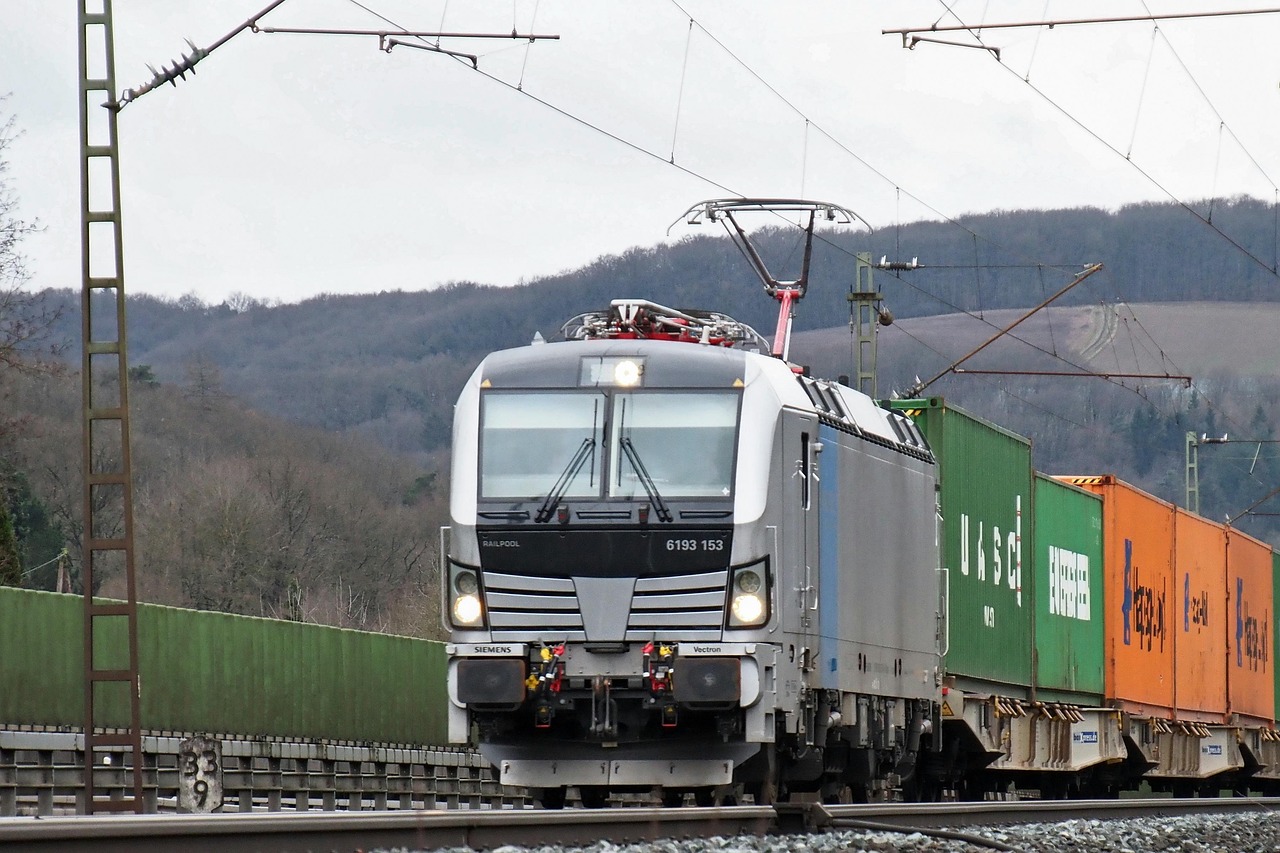
When the Train Is Full: Booking Ahead on China-Europe Rail
Block trains carry a fixed number of slots on a fixed date, which is why the booking calendar governs a westbound rail shipment long before the rate does.
Representative scenario, not a specific client engagement. This page describes how a shipment of this kind is genuinely handled — the constraints, the approach, and where it commonly goes wrong. It does not name or describe a real Transeasy customer. Our two documented project moves are the Mexico container move and the India overweight cargo delivery.
The situation
Shippers moving general cargo westbound from China often approach rail the way they approach ocean freight: gather three rates, take the lowest, then arrange collection once the factory is ready. Rail does not work in that sequence. A block train is a fixed formation with a fixed number of platform slots leaving on a fixed date, and once those slots are sold, no amount of rate negotiation creates another one.
The consequence usually appears late. A rate is accepted, production runs a few days over, and the slot being held has been released to another shipper. The next departure on that service may sit several days out, and it may carry different pricing because it falls in a different capacity window. What the buyer treated as a rate decision has become a schedule decision, made for them.
What made it difficult
- A train cannot be lengthened the way a vessel operator can flex an allocation, so each departure carries a hard ceiling on the number of containers it will accept.
- Capacity across the whole corridor tightens in the weeks before Chinese New Year and again during the European pre-Christmas restock, when every shipper is chasing the same slots.
- Cargo readiness at the factory is almost never as fixed as the departure date, and any slippage at origin is absorbed by the shipper rather than by the train operator.
- A rate quoted without a confirmed slot is an indication of price, not a reservation of space, and the two expire on different terms.
How it is approached
The working order is date first, price second. Where the cargo has a required arrival, a competent forwarder works backwards from it: delivery date, import clearance, terminal-to-terminal transit, gate-in cut-off, export declaration and collection. That calculation produces a departure window rather than a departure day, and the booking is placed against the earliest realistic departure inside it, with the rate negotiated around a slot that is already held.
Readiness has to be tested rather than assumed. Ask the factory for a date it will commit to, then check that against the terminal cut-off, which falls days before the train departs and covers gate-in, the export declaration and the rail consignment note. Where the factory date and the cut-off sit close together, the sensible move is to book the following departure and keep the slot, instead of holding an aggressive one that is likely to be released.
It also helps to keep an alternative live rather than theoretical. Several Chinese terminals feed the same westbound corridor, so a full train out of one loading point does not mean the corridor is closed. A different origin terminal, a later service, or a rail groupage booking for part of the load will often move the cargo inside the same week. Those options need to be priced at the time of booking, not discovered afterwards.
Where only part of the consignment is genuinely time-critical, splitting it is usually cheaper than upgrading all of it. The urgent portion travels by air, the balance holds the rail slot, and the buyer pays a premium on a fraction of the volume instead of on the whole shipment. Rail sits between ocean and air on both cost and speed, and that position is only useful when the departure date has been protected.
Facing something similar?
Send us the cargo details and we'll come back within one business day with routing options and a real price.
Takeaways
- On rail the scarce commodity is the slot rather than the rate, so the booking decision should be settled before the pricing discussion.
- Working backwards from the required arrival produces a departure window, which is a more honest planning tool than a single target date.
- Peak periods compress capacity across the entire corridor at once, so bookings in those windows need to move forward by weeks rather than days.
- A held rate is not held space, and treating the two as equivalent is the most common cause of a missed train.
Frequently asked
Two to three weeks ahead of your required departure is a reasonable working rule in normal conditions, and longer in the peak windows before Chinese New Year and the European pre-Christmas restock. Booking earlier buys routing flexibility and rate stability rather than speed. If your factory date is uncertain, book the departure you can actually meet rather than the one you hope to meet.
A block train is a fixed formation. Unlike a vessel, where an operator can flex an allocation or roll cargo onto a larger ship, a train has a set number of platform slots on a set departure date and cannot be made longer. Once those slots are sold the departure is closed, regardless of what a shipper is willing to pay for it.
The slot is released and the shipment is rebooked onto the next available departure, which may be several days later and priced differently. If containers have already been positioned or gated in, terminal storage can begin to accrue. The practical protection is a realistic factory date, checked against the gate-in cut-off before the booking is confirmed rather than after.