

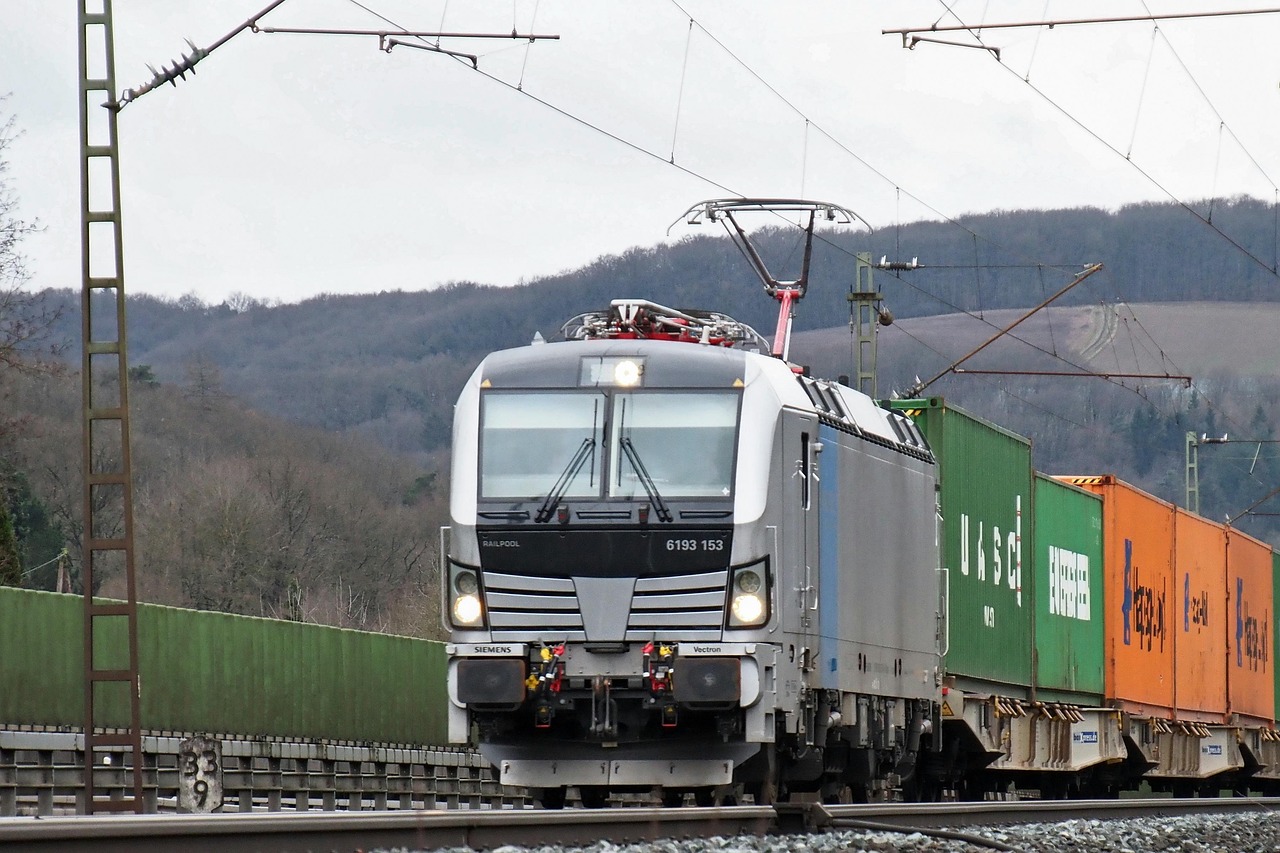
Freight from China to Central Asia and Russia
Rail and road corridors through Kazakhstan, Uzbekistan and the Russian Federation — the practical way to reach landlocked markets that ocean freight cannot serve directly.
How this lane works
This corridor is defined by a simple geographic fact: most of the destinations have no coastline. Ocean freight can only reach them via a port in another country plus a long inland leg, which is why rail and road carry the majority of the volume and why this lane rewards operators who actually know the border crossings.
Border procedure, not distance, sets the timetable. Equipment transfers between the Chinese standard-gauge network and the 1520mm broad-gauge network, and queuing at those crossings explains most of the schedule variance on the corridor. Road moves face their own version of the same thing — transit documentation and axle-weight rules on the route matter more than the driving hours.
Cargo on this lane crosses continental interiors where winter temperatures fall far below anything a vessel encounters. Goods sensitive to freezing — liquids, batteries, some electronics and coatings — need that flagged at booking rather than discovered at delivery. Machined and unpainted steel needs corrosion protection for the same reason: repeated condensation cycles across a long overland transit.
Where volume does not justify a full container train, road becomes the sensible answer, and for cargo that exceeds container dimensions the route has to be surveyed before it is committed — bridge clearances, tunnel profiles and axle limits inland are frequently more restrictive than anything on the main leg.
Destinations we run to
Ports, airports and inland terminals on this lane with published route guides. If your destination isn't listed, we almost certainly still serve it — ask.
Get a quote for Central Asia & Russia
Send the cargo details and we'll come back within one business day with routing options and a real price for your exact origin and destination.
Every Central Asia & Russia route, with real transit ranges
Transit times, cost drivers, required documents and the mistakes that cost the most time — one page per route.
Xi’an → Moscow
Russia- Main leg
- 12–16 days
- Door to door
- 17–22 days
Shenzhen → Moscow
Russia- Main leg
- 20–28 days
- Door to door
- 26–35 days
Shanghai → St Petersburg
Russia- Main leg
- 35–45 days
- Door to door
- 48–58 days
Lianyungang → Almaty
Kazakhstan- Main leg
- 10–14 days
- Door to door
- 15–20 days
Xi’an → Tashkent
Uzbekistan- Main leg
- 12–16 days
- Door to door
- 17–23 days
Urumqi → Bishkek
Kyrgyzstan- Main leg
- 5–9 days
- Door to door
- 8–14 days
Zhengzhou → Yekaterinburg
Russia- Main leg
- 11–15 days
- Door to door
- 16–21 days
Shenzhen → Novosibirsk
Russia- Main leg
- 14–19 days
- Door to door
- 20–26 days
Urumqi → Baku
Azerbaijan- Main leg
- 16–22 days
- Door to door
- 22–30 days
Shipment problems we solve on this lane
Representative scenarios — how a shipment of each kind is genuinely handled. These describe types of problem, not specific customers.
Preventing Corrosion on Rail to Russia
Rail FreightBare machined steel arrives rusted after a long rail crossing; how condensation, VCI barrier packing and desiccant calculation decide whether it does.
Read the scenario Mixed CargoWhere China-Europe Rail Transit Time Goes
Rail FreightMost schedule variance on China to Europe rail is created at the two gauge-change crossings rather than across the distance, and it is managed with ranges and milestones.
Read the scenario Mixed CargoTrucking to Central Asia vs. Rail
Road FreightWhen a Central Asian consignment is too small for a container train and too routine for air, road freight closes the gap, provided the crossings are planned rather than assumed.
Read the scenario Mixed CargoRail and Road Routing Into Russia
MultimodalRail and road combine well to inland Russian and Central Asian destinations, provided one party owns the handover where storage, clearance and rebooking costs quietly collect.
Read the scenario ConstructionStructural Steel Exceeding Container Width
Project CargoOut-of-gauge structural cargo moving to Central Asia and Russia, where dimensions drive the price, the equipment and the route in that order.
Read the scenario MachinerySpare Parts Air Freight for Stopped Plant
Air FreightWhen plant is down the objective is the earliest usable part, not the fastest flight; how a spare parts air move into Central Asia is planned door to door.
Read the scenario ConstructionConsolidating Scaffolding to a Programme
MultimodalScaffold and formwork are only useful as complete sets, so overland consolidation to Central Asia is built from the erection sequence backwards.
Read the scenarioFurther reading for this lane
External standards bodies and government sources, linked for reference. Transeasy is not affiliated with these organisations.