Rail Freight from China to Europe, Central Asia and Russia
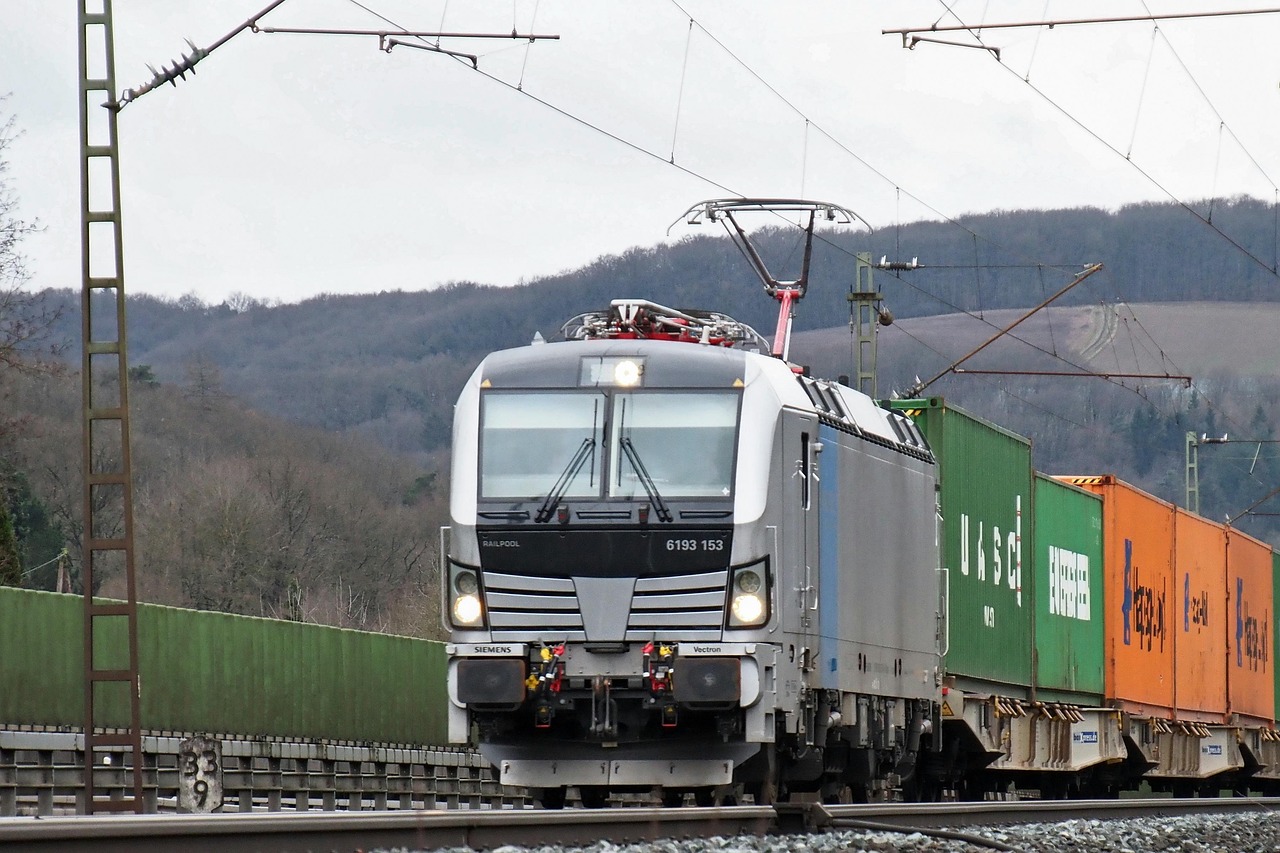
Rail sits between the two modes most buyers already use: it costs less than air and moves faster than ocean. We book full containers on block train departures and part loads on groupage consolidations across the Kazakhstan, Mongolia and Russia corridors, and we run the move end to end.
What this service covers
Rail is one of our core strengths. On the China–Europe, China–Central Asia and China–Russia corridors we handle the whole move: collection in China, export clearance, the rail leg with its border transhipments, import clearance at destination and the final road delivery. For cargo in the middle of the value range — too expensive to leave sitting on a vessel for weeks, not urgent enough to justify a flight — rail is usually the mode that settles the argument.
The geography decides your options, so it is worth knowing. Trains leave China through a small number of border gateways: Alashankou and Khorgos in Xinjiang into Kazakhstan, Erenhot in Inner Mongolia into Mongolia, and Manzhouli and Suifenhe into Russia. Europe-bound traffic then crosses Kazakhstan and Russia, passes through Belarus and enters the EU at the Belarus–Poland border, where services terminate or tranship for onward road distribution. Central Asian traffic stays inside the former Soviet rail network and runs to inland destinations in a region with no access to open-sea ports, which is why rail there competes mainly with road and air.
Twice on a European run, and once on a Central Asia or Russia run, the train reaches a break of gauge. China and most of Europe use 1,435 mm standard gauge; Kazakhstan, Russia, Belarus, Mongolia and the Central Asian republics use 1,520 mm broad gauge. The containers cannot roll across, so at the border terminal they are lifted from one wagon set to another. Your cargo is not unpacked and the seal is not broken, but the lift is real handling and the terminal is where most of the variable time is spent. Cargo that is evenly loaded and properly braced inside the box takes this without incident; cargo stacked loose to the doors does not.
Dominic Wang, our railway and road service specialist, handles these bookings. A rail quote from us names the corridor, the border crossing, the equipment, the expected transit for that routing and exactly what is included at each end. We put the same attention into the paperwork, because the rail consignment note travels with the cargo and an error on it gets corrected at a border terminal rather than at a desk. Where rail is the wrong answer for a shipment we say so and quote the mode that is right — we run air, sea, road and multimodal as well, so we have no reason to push you onto a train.

What you get when you book this service
Corridor and departure selection
We weigh the gateway options against your origin province and your destination — Alashankou or Khorgos into Kazakhstan, Erenhot into Mongolia, Manzhouli or Suifenhe into Russia — and tell you which corridor and which departure week we are booking, not simply that the cargo goes by rail.
Block train slots and groupage consolidation
A block train runs as one formed train on a fixed path and is not re-marshalled en route, which is where rail gets its schedule discipline. If you do not have a full container we load you into a groupage consolidation instead, rated on weight or volume, whichever is greater. We tell you which of the two you are on, because the cut-off, the cost basis and the flexibility all differ.
Equipment nomination and weight limits
Most China–Europe rail moves go in 40ft high-cube containers, with 20ft units used where density rather than volume is the constraint. We confirm the usable internal volume for the equipment nominated, and what is left of it once packaging and dunnage are allowed for. Open top and flat rack can be used for out-of-gauge pieces subject to loading-gauge approval on the routing. Rail operators also apply a maximum gross weight per container that can sit below the equivalent ocean limit; we confirm the figure for your service before you load.
Pre-carriage, loading and cargo securing
Collection by FTL or LTL from your factory to the loading station, or staging through bonded or un-bonded warehousing where you are consolidating several suppliers into one container. Rail applies longitudinal shock at coupling and shunting that ocean does not, so we specify blocking, bracing and dunnage accordingly, and record seal numbers and loading photographs before the doors close.
Export clearance and rail documentation
Chinese export declaration, with the commercial invoice and packing list checked against the HS code before submission, and the rail consignment note prepared for the legs it covers: SMGS across the 1,520 mm network, CIM within Europe, or the common CIM/SMGS note where the service uses it. Certificates of origin arranged where the destination's duty treatment or import rules require one.
Border transhipment and milestone tracking
We follow the container to the China exit terminal, through the lift onto broad-gauge wagons, across the transit countries and through the second gauge change at the Belarus–Poland border on European moves. You get position updates at the milestones that actually change the arrival picture — departure, each border, arrival at the destination terminal — and a clear message if a terminal starts queueing.
Import clearance, delivery and insurance
Import clearance at destination and the final road leg from the rail terminal to the consignee's door, by FTL or LTL as the volume warrants. Cargo insurance is available across the rail leg and the road legs either side; we recommend it on rail because the container is lifted between wagon sets at least once and passes through several jurisdictions before it arrives.
From enquiry to delivery
Enquiry and corridor options
Send us the commodity and HS code, gross weight, dimensions or CBM, packaging type, the Incoterm, the collection address in China and the delivery address. We answer quote requests within one business day with the corridor and border crossing we would use, the equipment, the expected transit for that routing and the all-in cost. If the cargo is dangerous goods, out-of-gauge or temperature-sensitive, tell us at this stage — those three decide whether rail is available at all.
Space booking and equipment allocation
We book the slot on a block train departure or a place in a groupage consolidation, nominate the container type and confirm the cargo cut-off at the loading station. In peak weeks we will also tell you the realistic alternative departure if the first one fills, so you are not making a decision twice.
Collection, loading and export clearance
Road pre-carriage from your factory, or consolidation at a warehouse where several suppliers feed one container. The container is loaded with rail's shunting forces in mind — weight distributed evenly, voids filled, loads braced — then sealed and photographed. We lodge the export declaration and prepare the rail consignment note against the same invoice and packing list, so the numbers agree before the cargo moves.
Departure and the first gauge change
The train runs to the Chinese border terminal, where the container is lifted from 1,435 mm standard-gauge wagons onto 1,520 mm broad-gauge wagons for the Kazakhstan, Mongolia or Russia leg. This transhipment and the customs transit formalities are the usual source of variation in rail transit. We track the container through it and tell you if it holds.
Transit, second gauge change and arrival
Across Kazakhstan or Mongolia, Russia and Belarus, the consignment moves under transit documentation. European traffic changes gauge a second time at the Belarus–Poland border, back to 1,435 mm, and continues to the destination terminal. Central Asia and Russia traffic stays on broad gauge to arrival with no second change.
Import clearance, delivery and close-out
We lodge import clearance at destination, release the container from the terminal and run the final leg by FTL or LTL to the consignee, or deconsolidate a groupage container first. You receive proof of delivery and a document set that matches the invoice. If anything was damaged, we open the claim with the insurer against the loading photographs and seal record.
When this is the right service — and when it is not
Best for
- Cargo bound for landlocked Central Asia — Kazakhstan, Uzbekistan, Kyrgyzstan, Tajikistan and Turkmenistan — where there is no open-sea port to sail to and rail competes mainly with road and air.
- Mid-value manufactured goods where ocean ties up working capital for too long and air costs more than the margin allows: machinery parts, electrical and electronic accessories, automotive components, tooling.
- Regular replenishment flows into Europe, where a repeatable departure pattern is worth more to the planner than the absolute fastest transit.
- Inland destinations in Europe, Russia or Central Asia that sit closer to a rail terminal than to a sea port, so the road leg at the far end is short.
- Shipments that have to leave China when ocean space or equipment is tight, and a booked rail slot is more certain than a rolled vessel booking.
- Dry, robust, non-hazardous general cargo in full containers, or part loads that fit a groupage consolidation.
When another mode fits better
Rail is the wrong choice more often than its reputation suggests, and it is cheaper for both of us if we say so before you book. Cargo that needs tight temperature control does not belong on a long overland transit: reefer acceptance on these corridors is limited, powered units depend on fuel and monitoring at points where neither is easy to arrange, and the route crosses continental winters well below freezing and hot Central Asian summers — liquids, coatings, foodstuffs and some pharmaceuticals are at genuine risk, and ocean reefer or air is the safer answer. Dangerous goods are restricted rather than impossible: acceptance varies by class, by corridor and by the transit countries involved, so send us the UN number, class, packing group and MSDS before we quote rather than after. Very heavy or out-of-gauge pieces run into the rail loading gauge — tunnel and bridge clearances are fixed and a route approval can simply come back negative, at which point road, multimodal or break-bulk sea is the real option. Low-value, high-density commodities where cost per tonne decides the deal still belong on a vessel, and anything genuinely time-critical belongs on an aircraft. If the consignee sits a long road haul from the nearest rail terminal, the last-mile cost can swallow the saving over ocean entirely. We quote all of these modes, so when the answer is not rail we will tell you what it is.
General corridor geography for rail freight out of China
Gauge is the reason for the border stops: China and most of Europe run 1,435 mm standard gauge, while Kazakhstan, Russia, Belarus, Mongolia and the Central Asian republics run 1,520 mm broad gauge, so containers are lifted between wagon sets at the frontier. This table is industry-general reference — the routings, departure frequency and terminal conditions available in any given week vary, and we confirm both when we quote.
| Corridor | Main crossing out of China | Gauge changes en route | Typical destination regions | What to watch |
|---|---|---|---|---|
| China–Europe via Kazakhstan | Alashankou–Dostyk or Khorgos–Altynkol, Xinjiang | Two: standard to broad at the Kazakh border, broad back to standard at the Belarus–Poland border | Poland, Germany, the Netherlands, Czechia, with onward road distribution across the EU | Terminal dwell at both transhipment points; queueing when volumes spike |
| China–Europe via Mongolia | Erenhot–Zamyn-Üüd, Inner Mongolia | Two: Mongolia and Russia are broad gauge, Europe is standard | The same European markets, reached through Mongolia and Russia | Departure frequency and space vary more than on the Kazakhstan route |
| China–Europe via Manchuria | Manzhouli–Zabaikalsk, Inner Mongolia, direct into Russia | Two, with a longer broad-gauge section through Russia | European markets via Russia and Belarus | Usually chosen when the origin sits in north or north-east China |
| China–Russia | Manzhouli, Erenhot or Suifenhe | One, at the Chinese frontier | Moscow region, the Urals, western Siberia and other inland terminals | Commodity and consignee compliance screening needs doing shipment by shipment |
| China–Central Asia | Alashankou–Dostyk or Khorgos–Altynkol | One, at the Kazakh border — the whole region is broad gauge | Kazakhstan, Uzbekistan, Kyrgyzstan, Tajikistan, Turkmenistan | No open-sea alternative exists; plan the inland road leg from terminal to consignee early |
| Trans-Caspian (Middle Corridor) | Khorgos–Altynkol or Alashankou–Dostyk | One at the Kazakh border, plus sea transhipment across the Caspian | Azerbaijan, Georgia, Türkiye and onward into Europe | Multimodal by nature: schedule depends on ferry slots as well as rail paths |
Rail Freight — common questions
Rail sits between them on both cost and speed: dearer than a container on a vessel, cheaper than a flight, and faster than ocean while slower than air. The useful comparison is not mode against mode in the abstract but your cargo against your cash: rail wins when the value tied up in a longer ocean transit costs more than the rail premium, and loses when it does not. Transit depends on the corridor, the border terminals, the destination and the week, so we state the expected transit for the specific routing on the quote rather than quoting a general figure.
China and most of Europe use 1,435 mm standard gauge; Kazakhstan, Russia, Belarus, Mongolia and Central Asia use 1,520 mm broad gauge. The wagons are not compatible, so at the border terminal your container is lifted off one wagon set and placed on another. The container is not opened and the seal is not broken — the handling is of the box, not the goods. It does mean the cargo inside takes a lift and a set of shunting shocks, which is why we are particular about bracing and void filling at loading.
Yes. We load part loads into groupage consolidations, rated on weight or volume, whichever is greater, in the same way LCL works at sea. Groupage has a fixed consolidation cut-off and less flexibility than an FCL booking, so if your readiness date is uncertain, tell us — it is easier to hold a slot on the next consolidation than to catch one that has closed. For larger volumes a full container is usually both simpler and better value per unit.
Sometimes, and it depends on the detail. Acceptance varies by DG class, by corridor and by the transit countries a train crosses, and some classes are refused on services that carry others without difficulty. Send us the UN number, class, packing group, MSDS and packing specification with the enquiry and we will confirm whether rail will take it before we quote a price. DG is one of our specialisms across every mode, so if rail declines the consignment we will price it by sea or road instead rather than leave you without an answer.
Open top and flat rack containers are used on rail, but the constraint is different from ocean: the rail loading gauge — the clearance profile through tunnels, under bridges and past platforms along the whole route — is fixed, and an out-of-gauge piece needs route approval before it can be accepted. That approval sometimes comes back negative. Send dimensions, weight and the centre of gravity early. OOG, open top, flat rack and break-bulk project cargo are a specialism of ours, and if rail cannot clear the piece we will route it by road or sea instead.
The commercial invoice and packing list, the HS code and the Chinese export declaration, plus the rail consignment note for the legs it covers — SMGS across the broad-gauge network, CIM within Europe, or the common CIM/SMGS note where the service uses it. Add a certificate of origin where the destination's duty treatment or import rules call for one, an MSDS and DG declaration for hazardous goods, and an insurance certificate if we arrange cover. We check the set against itself before departure, because a discrepancy discovered at a border terminal costs days rather than minutes.
Space tightens on the same rhythm as the rest of China's export calendar: in the run-up to Chinese New Year and through the pre-Christmas quarter, when ocean pressure pushes additional cargo onto rail and border terminals work through a queue. Rates firm, slots close earlier and departure weeks fill in advance. The practical response is to book earlier, keep some flexibility on corridor and departure week, and avoid making the last shipment before a factory shutdown also the tightest one. We flag peak conditions on the quote when they apply rather than discovering them together later.
Dominic Wang is our railway and road service specialist and handles rail enquiries. Send the commodity and HS code, weight, dimensions or CBM, Incoterm, collection address and delivery address to joy@sztranseasy.com, or call +86 0755 3321 1432. We answer quote requests within one business day. If rail turns out not to be the right mode for that cargo, the same reply will tell you which mode is and what it costs.
Guides related to this service
China–Europe Rail Freight: A Practical Alternative to Ocean and Air
Faster than ocean, more affordable than air — rail sits in a sweet spot for the right cargo.
Read More Trade Lane UpdatesUnderstanding the China–Central Asia Rail Corridor
Rail and road to Kazakhstan and neighboring markets — a cost-effective option ocean freight can't reach.
Read More Trade Lane UpdatesRoad and Rail to Russia: Routing Through Central Asia
Overland transport to Russia remains one of the more specialized lanes Transeasy operates.
Read More Company News & Case StudiesWhy Rail Is Central to Our China–Europe Strategy
Rail logistics is one of Transeasy's core strengths — here's the reasoning behind that focus.
Read MoreExternal standards bodies and government sources, linked for reference. Transeasy is not affiliated with these organisations.