
China to Germany by Rail: Too Heavy to Fly, Too Slow by Sea
Mid-value electronics that cannot absorb air rates and cannot afford five weeks of inventory in transit, and how the China to Germany rail corridor is assessed.
Representative scenario, not a specific client engagement. This page describes how a shipment of this kind is genuinely handled — the constraints, the approach, and where it commonly goes wrong. It does not name or describe a real Transeasy customer. Our two documented project moves are the Mexico container move and the India overweight cargo delivery.
The situation
Some electronics sit awkwardly between the modes. Networking hardware, industrial controllers, power supplies and display assemblies carry enough unit value that five weeks of stock in transit ties up real working capital, yet not enough margin to absorb air rates measured in dollars per kilo. They are also dense, with metal housings, transformers and heat sinks, so chargeable weight for air sits close to scale weight and there is no volumetric saving to be found.
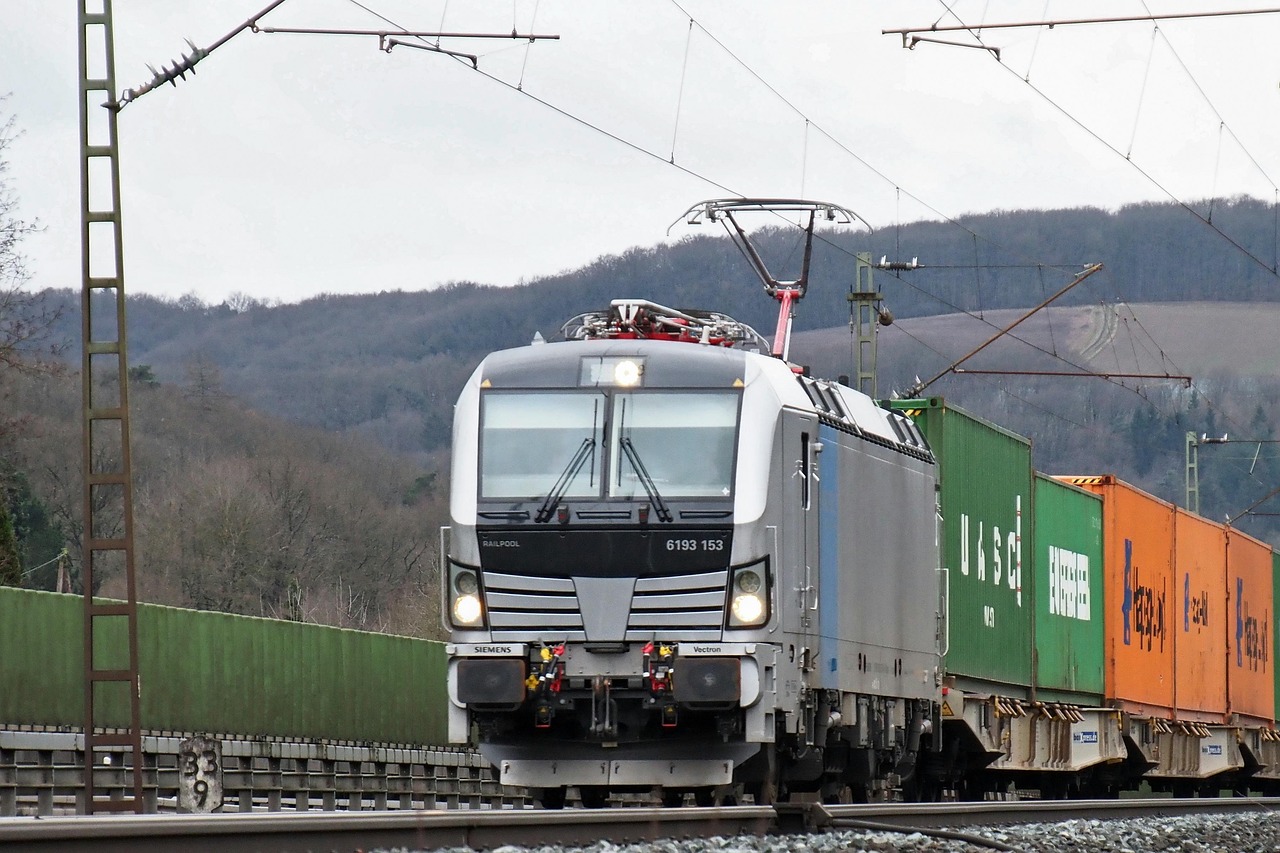
This is the band the China to Europe block train network serves. Indicative terminal-to-terminal transit to German inland terminals runs to roughly eighteen to twenty-five days, depending on corridor and border performance, sitting between sea at thirty to forty days and air at a handful. The price sits between them too. Rail is not a drop-in substitute for either, though, and it carries constraints of its own around capacity, temperature and battery acceptance.
What made it difficult
- Space on the China to Europe corridors is allocated in advance and tightens sharply in peak and ahead of Chinese New Year, so the booking has to be committed earlier than an equivalent sea booking.
- Northern-corridor containers cross continental interiors where winter temperatures fall far below anything a vessel encounters, which matters for lithium cells, liquid-crystal panels and electrolytic capacitors.
- Lithium battery cargo moves by rail under the RID framework and the operator's own acceptance rules, and those rules differ between operators and between border crossings.
- Gauge changes and border transshipment add handling events that a straight port-to-port sea move does not have, so internal bracing and packaging must survive more lifts.
How it is approached
The decision is made on landed cost, not on the freight rate. Model freight and duty alongside the cost of capital tied up in goods in transit and the safety stock needed to absorb transit variability, because a slower mode always demands more of both. Taking two weeks out of a thirty-five-day pipeline on a regular flow removes inventory from the system permanently, and for mid-value electronics that saving frequently outweighs the difference in rate.
Equipment and protection are specified rather than assumed. A forty-foot high cube is standard, but the container should be inspected for watertightness and prior taint before stuffing, and winter departures warrant desiccant, moisture-barrier bags for sensitive assemblies and a temperature logger inside the load. Cells travelling at a low state of charge tolerate cold and long dwell better than fully charged ones, which is worth specifying with the factory.
Customs is planned before departure, because rail transit is short enough that a documentation delay consumes a meaningful share of it. That means the EORI registration, the classification decision, the origin evidence and any preferential claim all settled in advance, together with an early decision on whether the goods clear at the arrival terminal or move inland under transit to clear closer to the consignee's warehouse.
The flow is then governed against a fixed departure slot. Nominating a weekly service and a corridor, and tracking the same milestones every time, gives the customer an arrival distribution rather than a single optimistic date. Where a corridor is disrupted, alternative routings exist but carry different transit times and different documentation, so the contingency belongs in the conversation at booking rather than at the border.
Facing something similar?
Send us the cargo details and we'll come back within one business day with routing options and a real price.
Takeaways
- Rail earns its place on landed cost, where the inventory and safety stock released by a shorter pipeline offset a rate higher than sea.
- Winter routings across continental interiors expose cargo to temperatures a vessel never sees, so protection must be specified at booking rather than left to a standard container.
- Rail capacity is allocated ahead and tightens before Chinese New Year, so the commitment date matters more on this mode than on a well-served sea lane.
- Battery acceptance on rail varies by operator and by crossing, so it has to be confirmed for the specific service rather than assumed from a general rule.
Frequently asked
Indicative terminal-to-terminal transit is roughly eighteen to twenty-five days, depending on the origin terminal, the corridor and how the border crossings are running. Add collection at origin and the onward road leg in Germany, and a realistic door-to-door range is three to four weeks. That sits between sea at thirty to forty days port to port and air at a few days.
Substantially, yes. Rail typically prices well below air and above sea, which is why it suits cargo too dense to fly economically but too valuable to sit on a vessel for five weeks. Run the comparison on landed cost per unit, including duty, insurance and the working capital tied up in transit, because the released inventory is part of what rail is buying.
In many cases yes, under the RID framework for dangerous goods by rail, but acceptance depends on the operator and on the crossings the service uses. Batteries contained in equipment are generally more straightforward than standalone cells. The classification, packing and marking must be established before booking, and the specific service confirmed as accepting that UN number rather than assumed from a general policy.