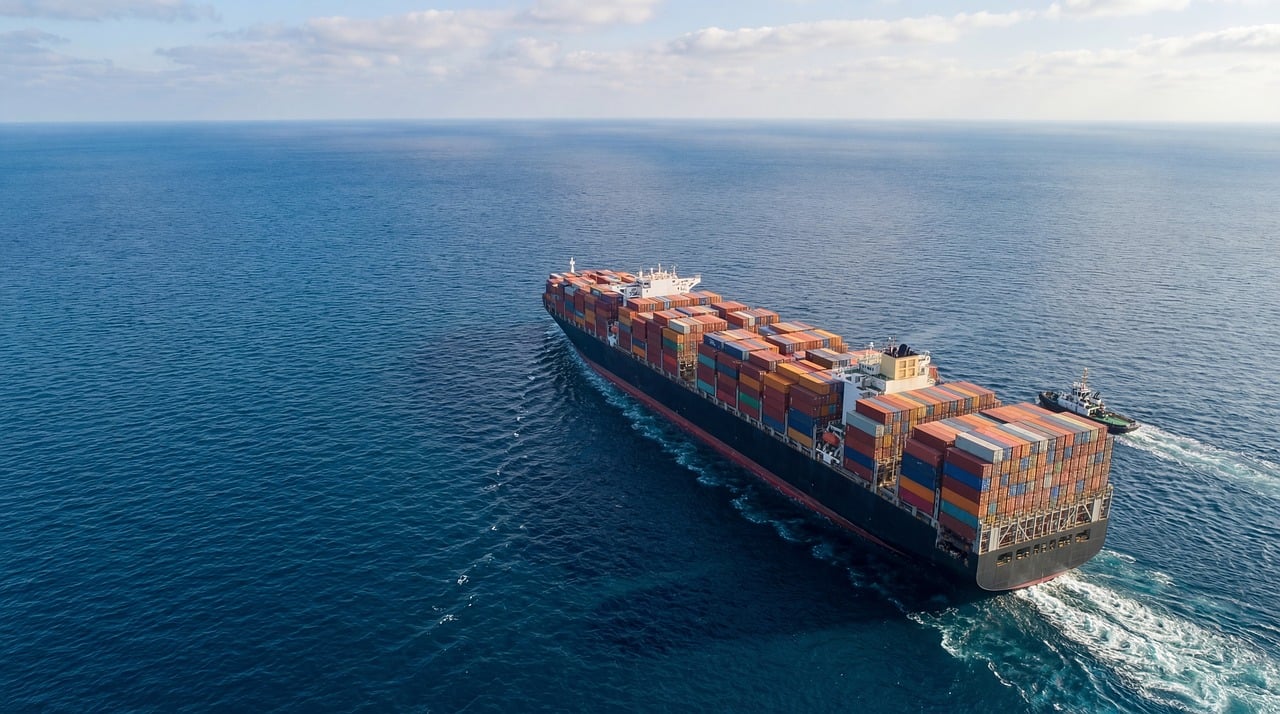
A Panama transit slot and usable capacity for heavy cargo are not the same thing. The Canal's throughput is limited by fresh water rather than by berths: Gatun Lake is rainfall-fed and every lockage draws on it. In dry periods the authority reduces the number of daily booking slots and lowers the maximum authorised draft, and those two measures reach your cargo through completely different mechanisms, which is why they need separate responses.
A slot reduction is a queueing and pricing problem. Fewer transits per day means competition for bookings, auction premiums on the slots that remain, and vessels waiting for a turn. A draft reduction is a weight problem. A ship restricted to a shallower authorised draft has to sail lighter, so the carrier must load less cargo weight regardless of how much container space the vessel has. The first shows up as delay; the second as cargo left behind.
Dense cargo absorbs the consequence. When a vessel is weight-limited but not space-limited, the commercially rational load is light, high-paying boxes, so tiles, stone, ceramics, machinery, batteries, canned goods, liquids in flexitanks and anything near a heavy-tested payload are what get rolled or surcharged. If you ship dense product to the US East Coast, expect weight caps on bookings and ask explicitly whether the quoted rate still holds at your actual gross weight per container.
There are three broad alternatives and each carries its own exposure. An all-water routing via Suez avoids the Canal entirely but sits on its own security and diversion risk; when vessels route around the Cape of Good Hope instead, a substantial number of days is added and schedule reliability degrades. That is a different risk rather than a smaller one, and it deserves to be priced and planned as such instead of treated as the safe default.
The second option is a US West Coast discharge with an intermodal rail move east. The water leg is shorter and more predictable, but the land leg introduces rail ramp dwell, chassis availability and inland terminal congestion, so the door transit becomes the sum of two systems with separate failure modes. Transloading from marine containers into domestic 53-foot equipment at the coast can improve inland economics, at the cost of an extra handling and a rehandling risk.
The third is a Mexican Pacific discharge with onward rail or road into the United States, which changes the customs picture as well as the routing and has to be assessed on the commodity and on the consignee's set-up, not on transit time alone. Where some of the cargo is destined for northern Mexico or the border region in any case, this can be the shortest chain available rather than a workaround for the Canal.
Port rotation deserves attention it rarely gets. Services do not call at every East Coast port at once, and a rotation change moves your discharge port earlier or later in the string by days. A transit quoted to the East Coast in general is close to meaningless; the number that matters is the transit to the specific discharge port on the specific string, and the demurrage and detention clocks start at that port too.
Accurate weights stop being a formality in this environment. The SOLAS verified gross mass requirement already obliges a declared VGM before loading, and on a weight-restricted routing an understated figure gets discovered at the terminal, where it becomes a rolled booking rather than a correction. Declare real weights, provide them early, and consider splitting heavy and light product across containers so dense boxes are not what makes an otherwise loadable consignment unloadable.
Routing to the US East Coast is a choice between different sets of risk rather than a search for one correct answer. We quote sea, rail and multimodal options side by side with the assumptions stated, including which gateway the price depends on and what happens to it when the transit basis changes. Send us the commodity, the gross weight per container and the final delivery point, and we will set the comparison out in full.